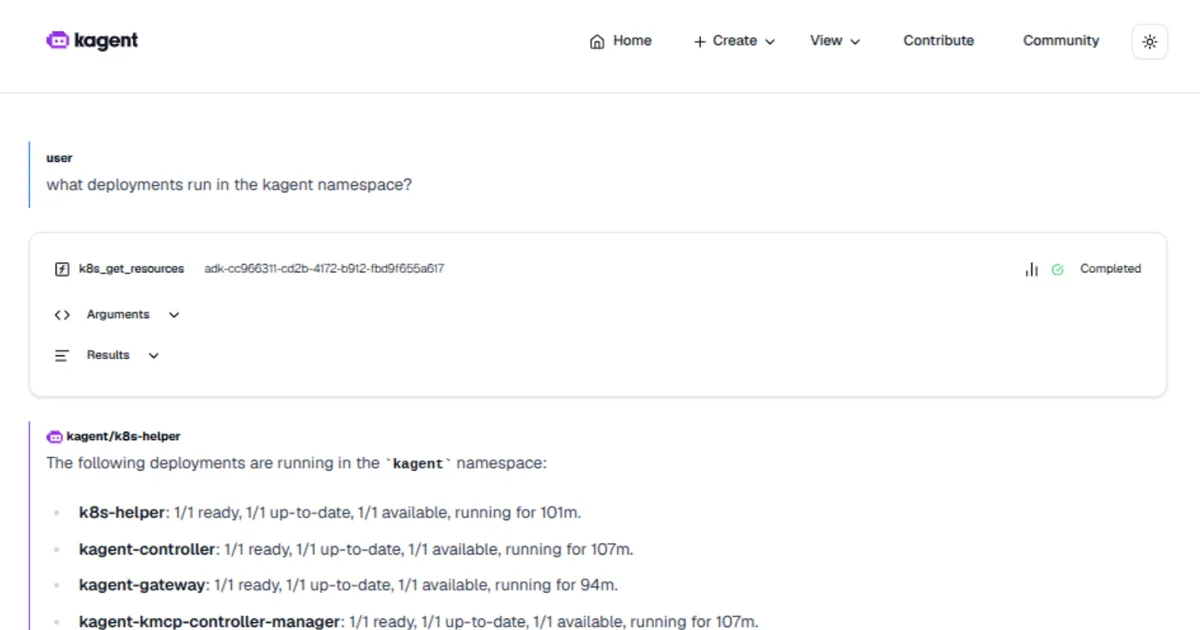
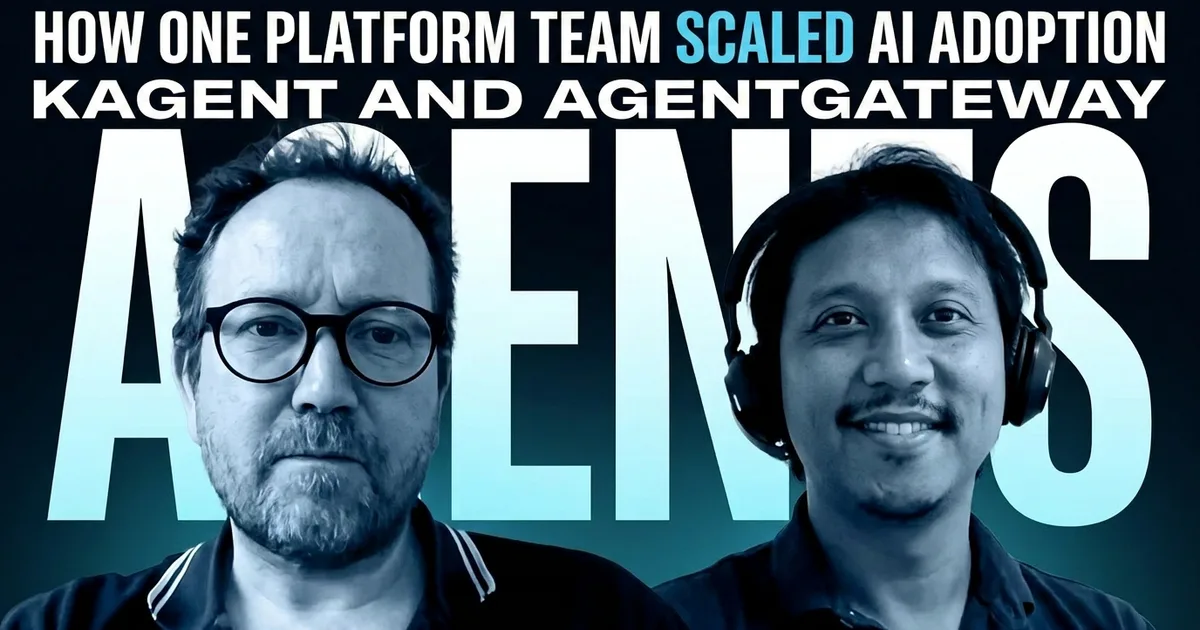
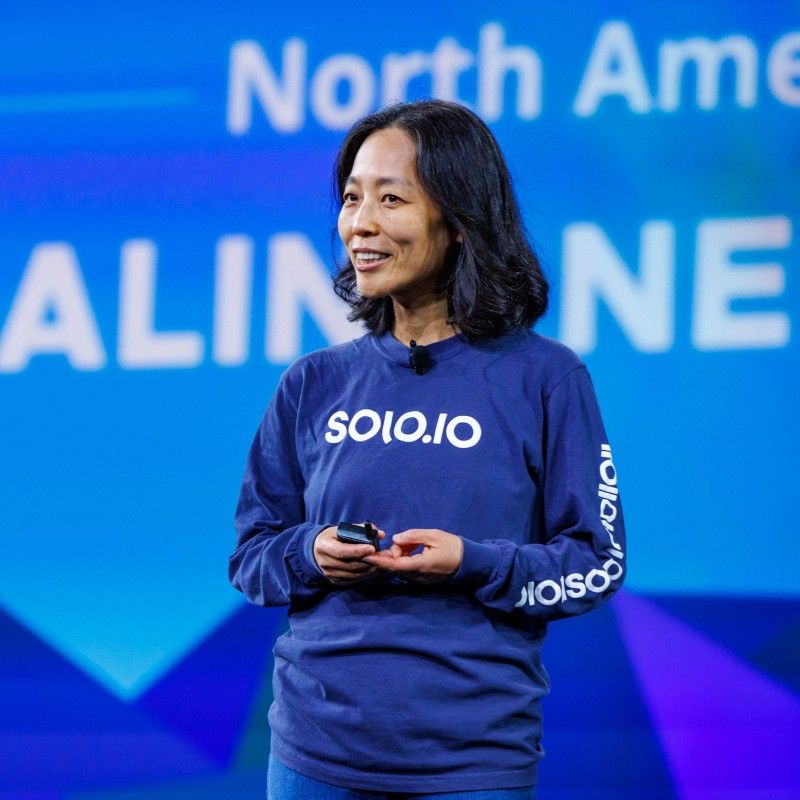
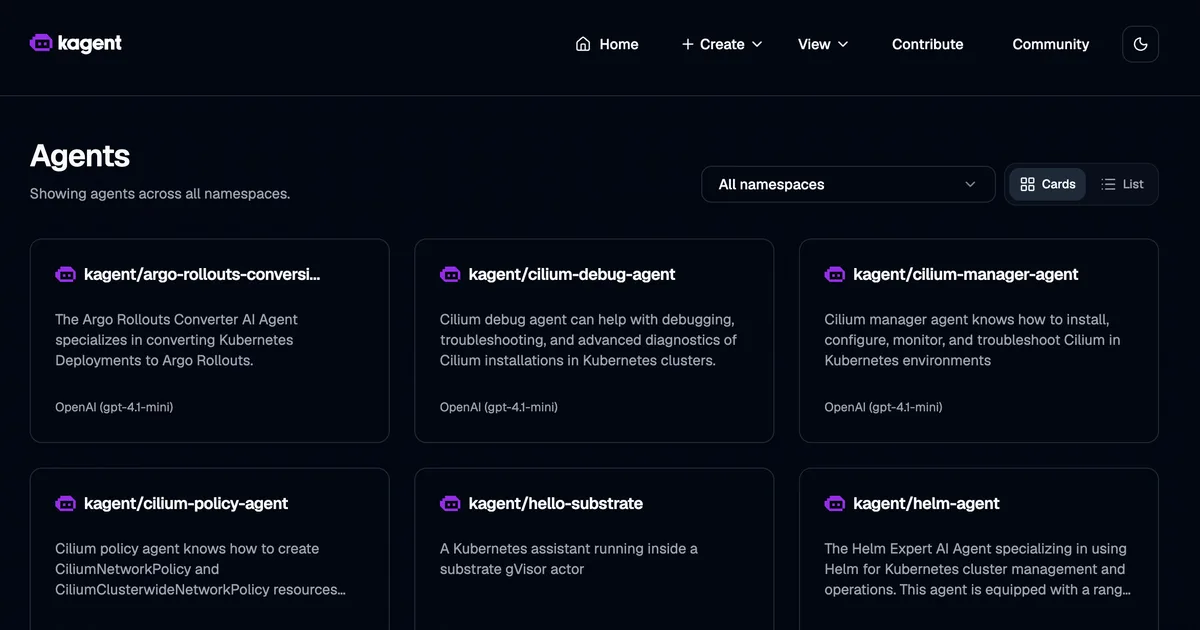
An agent that tracks vulnerabilities has to read the internet, which makes it the agent you least want running loose in your cluster. Build cve-watch the safe way: one egress policy for www.cisa.gov, one agent, and one schedule, running in a gVisor sandbox with default-deny egress on Agent Substrate.
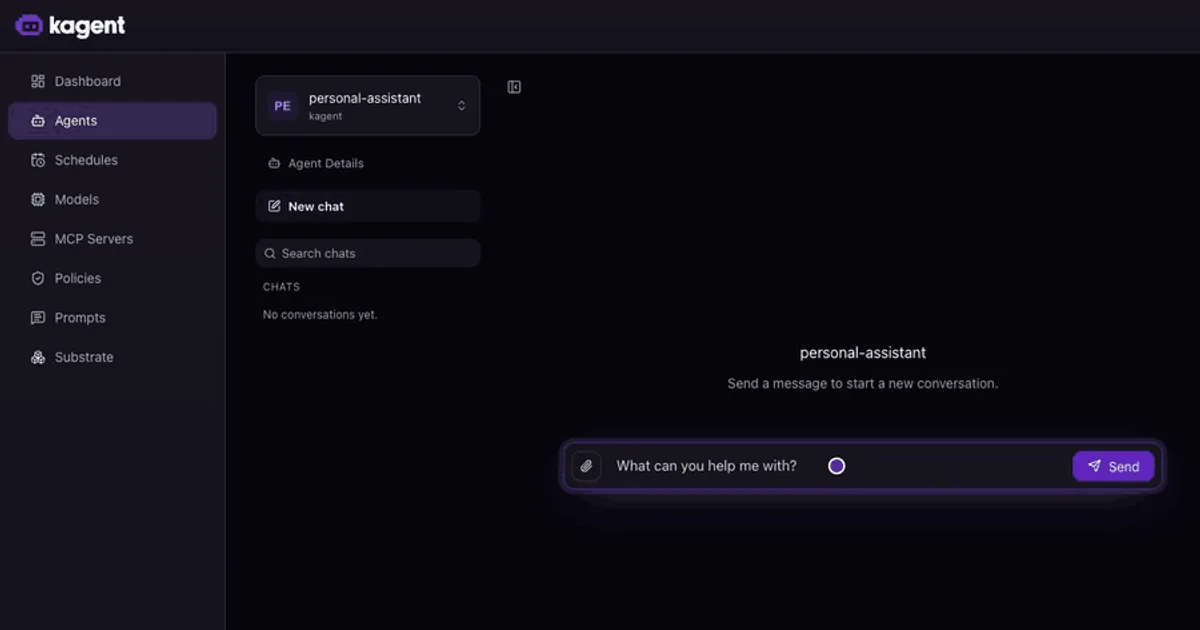
A hands-on tutorial: build a personal AI assistant in the kagent UI with a personality, a weather tool, and a morning routine. Along the way, see why Agent Substrate is the engine underneath: it sandboxes the assistant, suspends it when it waits, and resumes it on the next message.
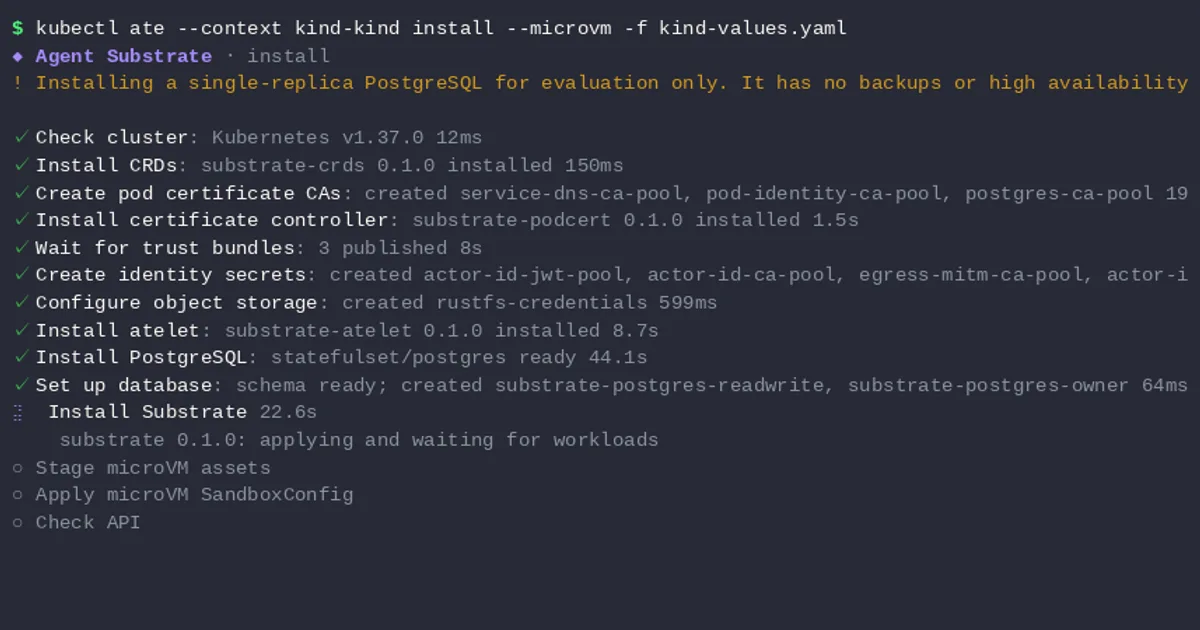
Agentic infrastructure shouldn't be tied to one cloud. The universal kubectl-ate installer sets up Agent Substrate on any Kubernetes cluster, including Kind, Minikube, AKS, EKS, and GKE, with no cloud-specific workarounds.
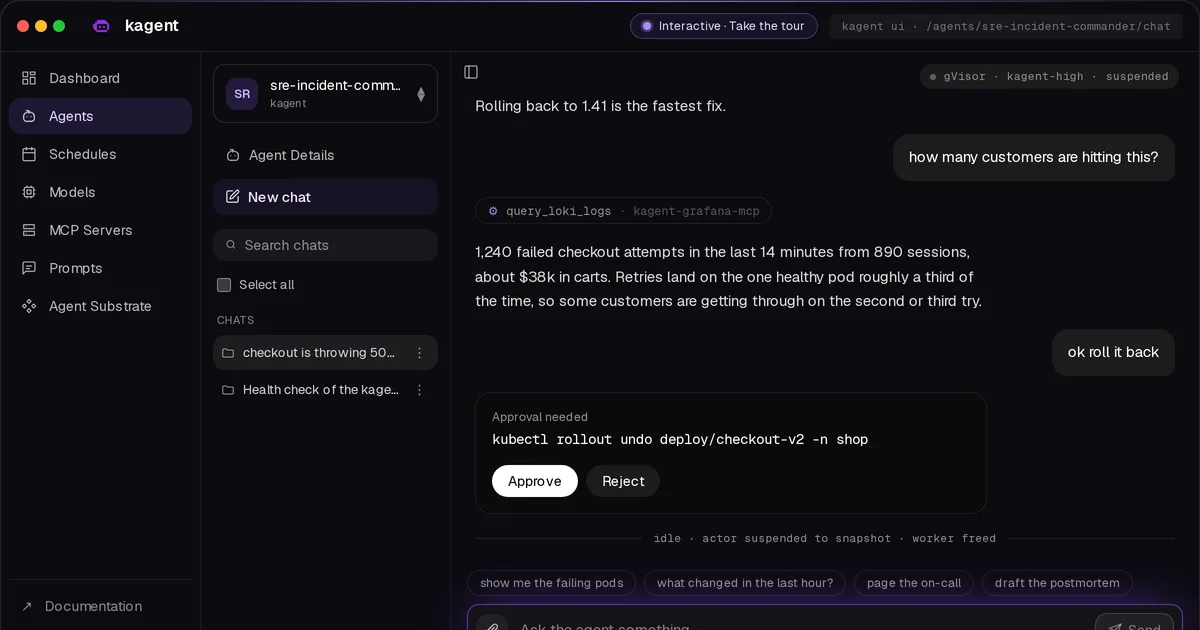
kagent 1.0 is out, and every agent now runs on Agent Substrate: sandboxed by default, suspended when idle, and resumed on the next message. Why Pods don't fit agents, what Substrate and kagent each do, and how to get started.
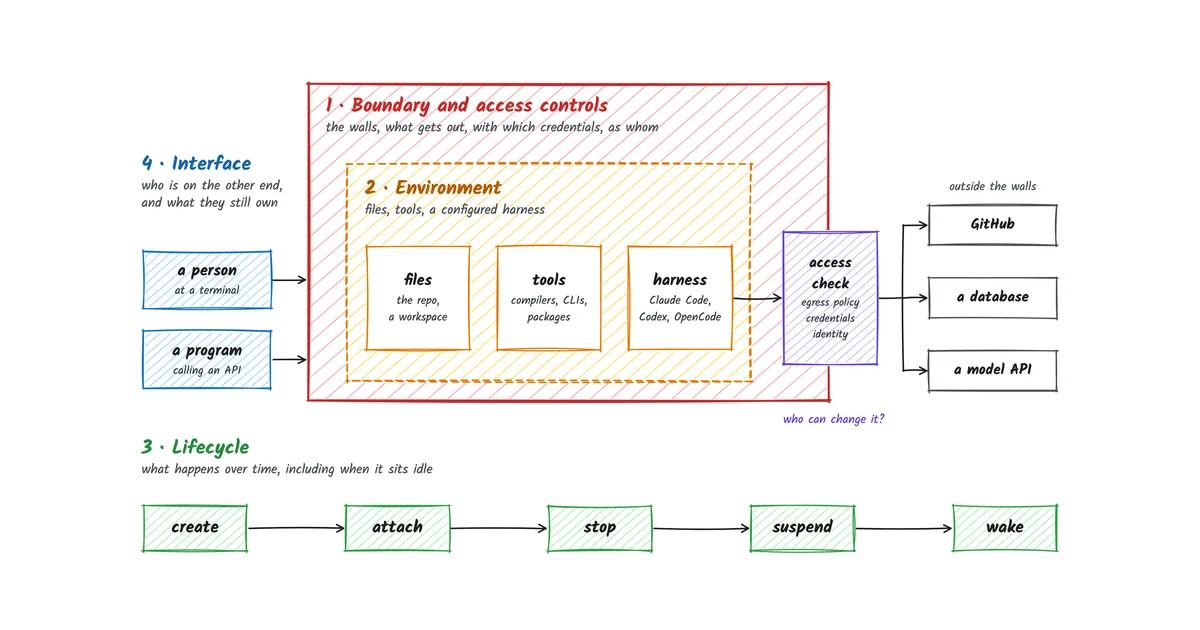
Discobox, OpenShell, E2B, SPACE, Agent Substrate, and other agent sandboxes make very different assumptions. This post introduces four axes for comparing them: boundary and access controls, environment, lifecycle, and interface and experience.
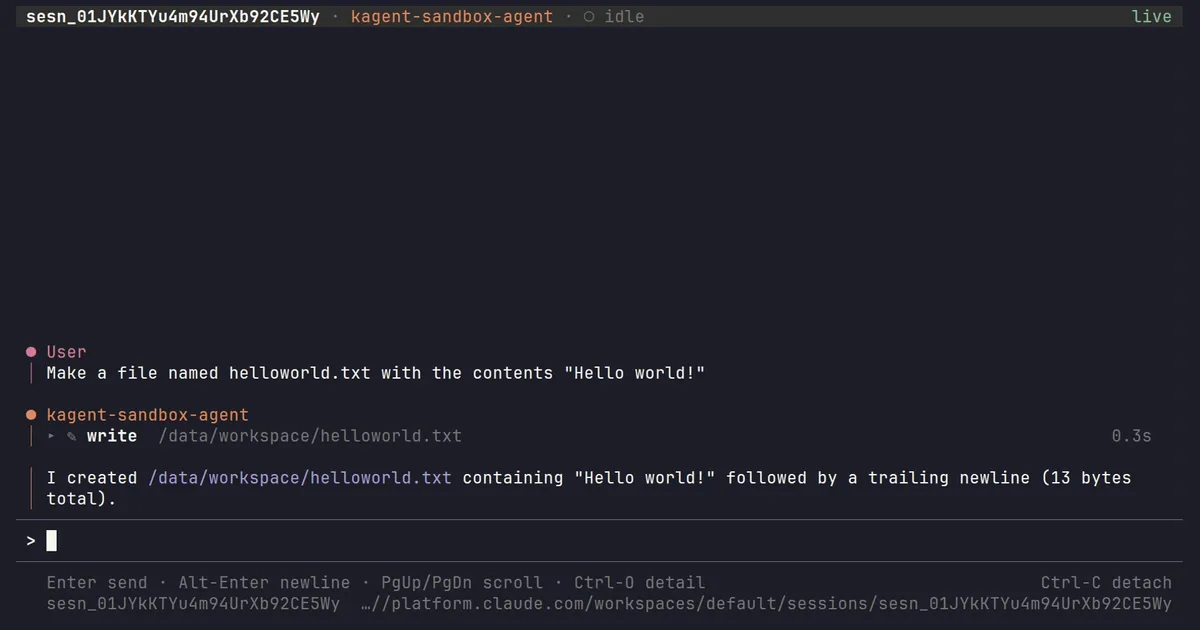
Isolation, security, and scale are what stand between an agent demo and an agent in production. Here is how Agent Substrate sandboxes agents with gVisor and microVMs, and how to run those sandboxed agents with kagent.
Read full article
kagentwebofmike.com
kagent 0.10 Ships Audience-Bound Agent Tokens, Off By Default
kagent v0.10.0 GA can bind an agent's exchanged token to one backend using RFC 8707 resource indicators. Two environment variables, both empty by default.
The open source distributions of kagent and agentgateway are now on the AWS, Azure, and Google Cloud marketplaces. Deploy both and connect them: from install to an agent served through agentgateway over A2A.
Read full article
kagentwebofmike.com
Thousands of AI Agents on Tens of Pods: kagent Agent Substrate
kagent Agent Substrate is built to run thousands of AI agents on tens of pods. I stood it up on kind: snapshot restores, autoscaling, and every gotcha I hit.
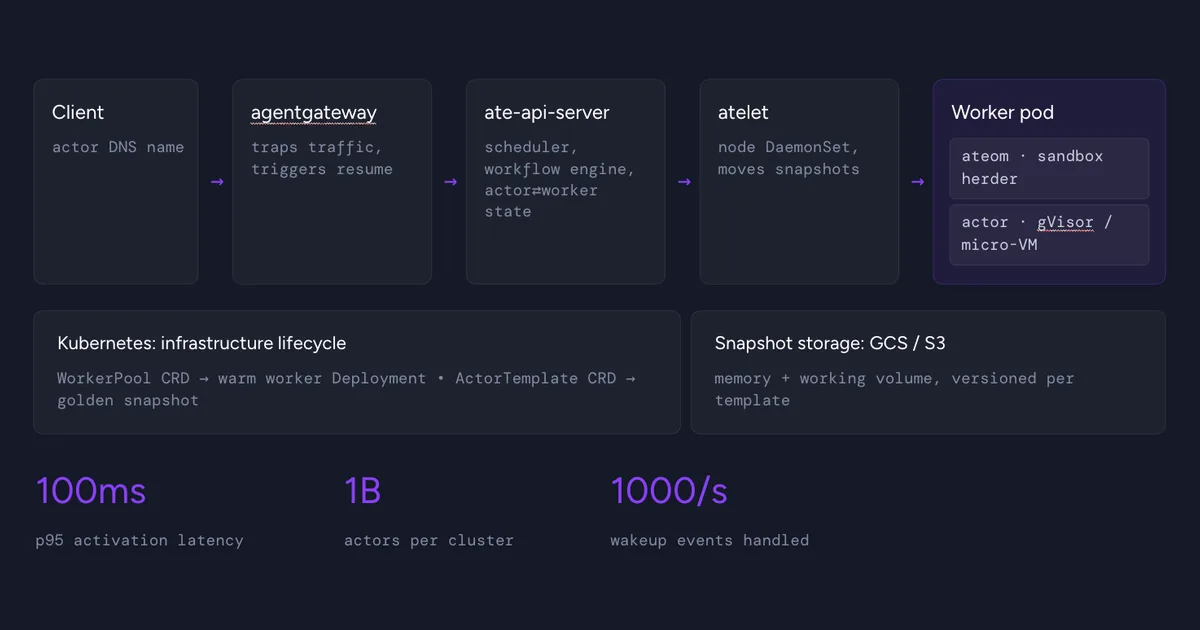
Agent sessions are bursty and idle most of the time. Agent Substrate multiplexes gVisor-sandboxed actors onto a small pool of warm workers with sub-second suspend/resume. This guide explains the model, the use cases, and how to stand up kagent OSS with substrate on a kind cluster.
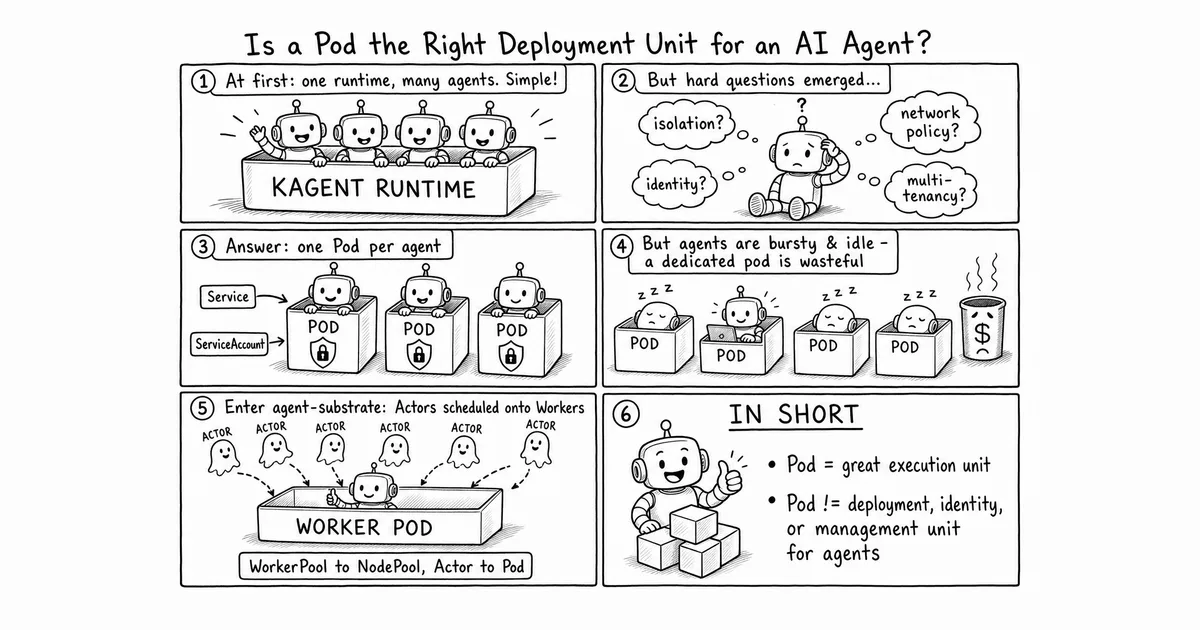
How kagent evolved from one runtime hosting many agents to agent-substrate—and why Pods may be the right execution unit, but not the right deployment model, for AI agents.
Learn how to bridge the gap between Agent client, sandbox, and what the enterprise needs for security, governance, and observability with kagent, nemoclaw, and openshell
Read full article
kagent
kagent v0.9.1 — What's New in Kubernetes-Native Agentic AI
kagent v0.9.1 brings AWS Bedrock support for Claude with extended thinking, REST API secret management, sidecar container support, Git-based skill configuration, and a configurable Helm runtime.
Read full article
kagent
We Added a Go Runtime to kagent and the Numbers Are Wild
We benchmarked kagent's Go and Python agent runtimes on image size, startup time, and memory. The results: 11x smaller images, 6.7x faster startup, and 36x less memory.
Read full article
kagent
Human-in-the-Loop with kagent: Keeping Humans in Control of AI Agents
How to build Kubernetes-native AI agents that pause and ask for approval before taking destructive actions, using kagent's human-in-the-loop capabilities.
Read full article
kagent
Inside Kagent: Architecting Open Source and Enterprise AI Agent Meshes for 2026
The article talks about how kagent democratizes cloud-native expertise by packaging expert knowledge into AI agents that can troubleshoot, diagnose, and automatically fix Kubernetes issues, demonstrated through a real-world example where an agent identified and resolved a misconfigured service routing problem by creating a GitHub pull request.
Read on platformers.community
kagent
From MCP Servers to Services: Introducing kmcp for Enterprise-Grade MCP Development
Discover kmcp, the lightweight toolkit that takes MCP servers from prototype to production. Learn how to scaffold, build, and deploy enterprise-grade MCP services to Kubernetes in minutes—no Dockerfiles or complex manifests required. Includes demo video and complete getting started guide.
Kagent is an open-source framework for building autonomous AI agents that can make decisions and perform tasks with minimal human oversight. Donated by Solo.io, it enables developers to create intelligent systems for virtual assistance, data processing, and workflow automation by leveraging generative AI and external API integrations.
Read on medium.com
kagent
AI Reliability Engineering For More Dependable Humans
This technical walkthrough demonstrates how to integrate ArgoCD's new MCP (Model Context Protocol) Server with kagent, an AI agent framework for Kubernetes. The author shows step-by-step how to deploy kagent via ArgoCD, configure it with OpenAI integration, add ArgoCD's MCP server as a tool, and create an AI agent that can directly query and interact with ArgoCD applications - showcasing the potential for intelligent Kubernetes operations through AI-powered automation.
Read on chrismatcham.dev
Join our community
Connect with other developers, share your experiences, and get support from the kagent community.
 kagent
 Sebastian Maniak•


 kagent